
The Burning In Your Feet At Night Is Often The First Sign Worth Paying Attention To. Here's What A New Health Report Explains.
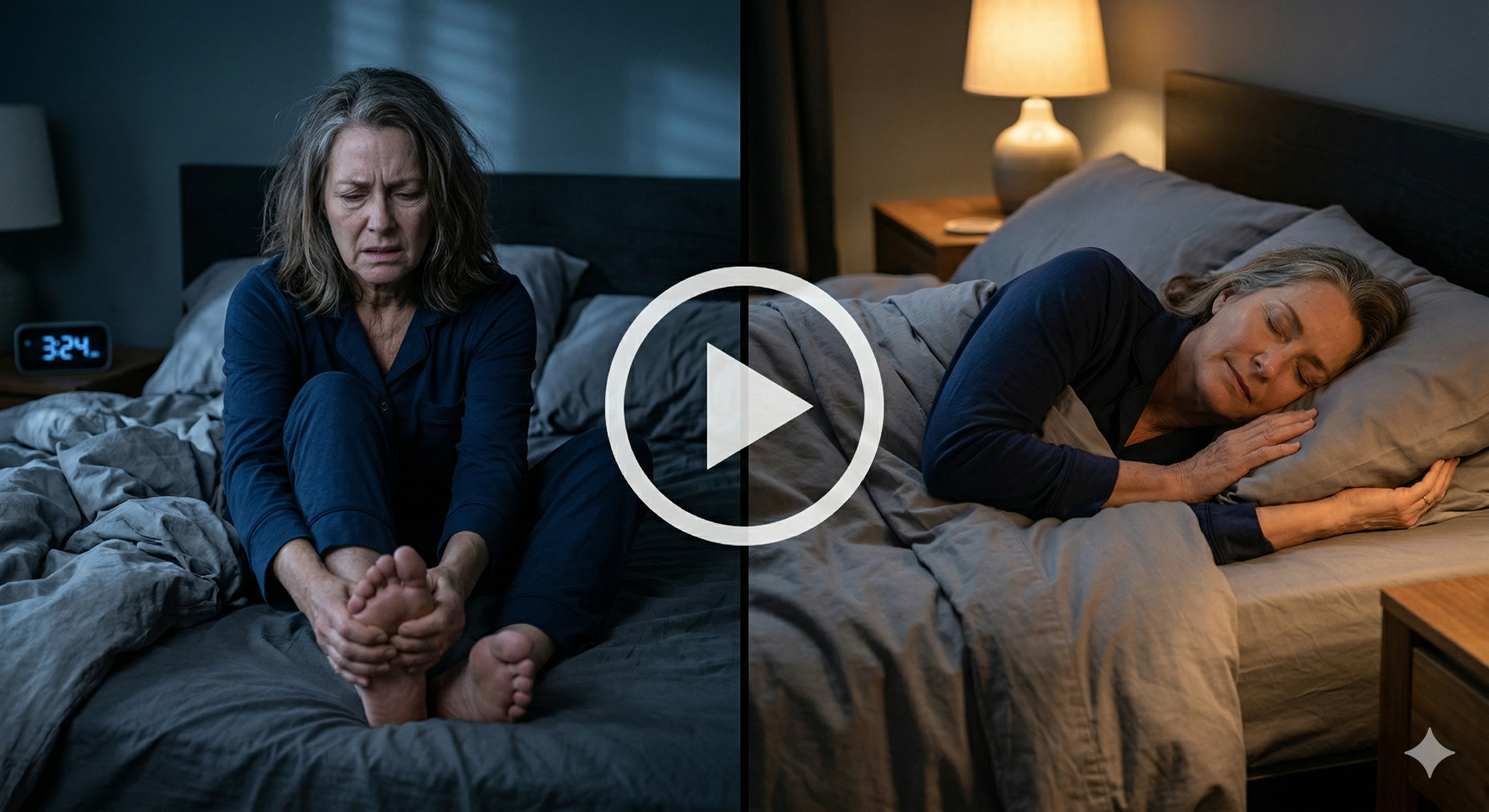
Many people experiencing nighttime burning in their feet are looking for ways to support nerve comfort beyond conventional approaches. A new health report explains a simple at-home method — using a common natural ingredient many households already have — that researchers are studying as part of an evening wellness routine.
You Already Lived Every One Of These. The Question Is Why No Doctor Ever Told You What They Actually Mean.
Read this list slowly. How many of them describe a night you had this week? How many doctors looked at the same list and prescribed another pill instead of telling you what was actually happening underneath?
- Burning or pins-and-needles sensations in your feet, especially at night
- Numbness that started in your toes and is now creeping up toward your ankles or calves
- Feet that feel "dead," heavy, or like they're not even there when you walk
- Sharp, electric-like pains that come out of nowhere
- Trouble sleeping because of the tingling, or losing your balance more often
If half of those describe a night last week — diabetes, chemo, an old injury, or no clear reason at all — listen carefully. Every single one traces back to the same thing happening inside your nerves right now. Something the doctor's office doesn't have a billing code for. Something nobody made a pill for. And something the pharmaceutical industry has zero financial reason to ever explain to you.
The Strangest Part? It's Already In Your Cupboard.
When Dr. O'Neal first tried to share her findings, the medical journals refused to print them. Not because the science was wrong. Because of what the active ingredient was.
It wasn't a new molecule. It wasn't a patented compound. It wasn't anything any pharmaceutical company could license, mark up 4,000%, and sell back to you through a prescription pad.
It was something most American households already have within ten feet of where they cook dinner. Something that costs less than a co-pay. Something that — used the specific way Dr. O'Neal discovered, at the specific time of night when the sticky plaque is most active — does what no nerve drug on the market can do.
That's why your doctor will never mention it. He literally cannot. There's no billing code for what's in your spice rack.
Every Drug They Hand You Was Engineered To Turn Off The Alarm — Not Fix What's Setting It Off.
Gabapentin doesn't repair a single nerve. It can't. It was never engineered to. The same goes for the next pill on the next prescription pad. The lidocaine cream they sell you for $80 a tube? It numbs the surface of the skin for forty minutes. The damage underneath keeps spreading.
The whole pharmaceutical model around neuropathy is built on one thing: silencing the alarm so you keep walking out of the office without asking what's actually triggering it.
Dr. Louisis Clark spent 27 years on the inside of the industry that designed those drugs. Then he walked out — not because of money, not because of burnout, but because he finally figured out what was eating his patients' nerves alive while they slept. And the answer wasn't on any drug label.
What he found is that in people with chronic nerve pain, a specific substance begins to build up around the peripheral nerves in the feet and legs. Researchers refer to it as a "sticky plaque" — and it slowly damages the protective coating of the nerve.
That's why the burning, numbness, and tingling only get worse over time, no matter how many medications you take. It's the same process whether your nerve pain started with diabetes, chemotherapy, an old injury, or seemingly out of nowhere.
That's also why a topical cream can't reach it. A painkiller can't dissolve it. And a generic B12 supplement on its own can't undo it.
The full explanation of what the sticky plaque is made of — and the specific common kitchen ingredient Dr. Barbara O'Neal discovered that dissolves it in roughly 10 seconds when used correctly — is in the short presentation below. She names it on screen. She shows the brand most Americans already have in the pantry. And she walks through exactly when, and how, to use it before bed.
Three People. Three Doctors Who Shrugged. One Thing They All Found Out On Their Own.
Individual results vary — these reflect personal experiences shared by users.

Linda, 68
Seattle, WA
★★★★★"I remember one morning I was trying to enjoy my coffee and the burning in my feet was unbearable. It felt like walking on hot coals. I was skeptical at first — I'd tried everything. But after a couple of weeks of following the method, the burning wasn't as intense. That was the first time in years I felt a little hope."

Tom, 52
Austin, TX
★★★★★"The tingling had started in my toes and was creeping up toward my ankles. My doctor had nothing new to offer me — just a higher dose of gabapentin. I tried the protocol and after a few weeks the tingling wasn't as frequent. Not a miracle, but it was the first thing in a decade that actually moved the needle."

Eleanor, 61
Chicago, IL
★★★★★"The numbness in my feet had been getting worse for years. I was nervous about what it meant. No doctor ever explained it to me the way Dr. O'Neal did in her presentation. After following the steps for a few weeks, I started feeling small changes — sensations coming back. I'm grateful for any bit of relief at this point."
Linda, Tom, and Eleanor saw three different doctors across three different states. They got three versions of the same shrug. None of them were told about the sticky plaque. None of them found out from their specialist. They found out from the same 23-minute presentation Dr. O'Neal recorded — the one that's still online, for now.
Common Questions About This Approach
Why is the burning in my feet at night actually a good sign?
It sounds counterintuitive — but pain is the nerve telling you it's still alive. Once peripheral nerves are damaged enough to stop firing, you stop feeling pinches, pressure, or even something sharp under your foot. By that point, the conversation in the doctor's office stops being about treatment and starts being about ulcers, infections, and what gets removed next. The burning is the last window where the underlying cause — what researchers call sticky plaque around the nerves — can still be addressed before sensation is permanently lost.
Is it safe to use alongside my current medications?
The approach is based on common natural ingredients and is not intended to replace any prescribed medication. If you're on insulin, blood pressure medication, gabapentin, or anything else, always consult your physician before making changes. The protocol is intended to complement — not replace — medical care.
How is this different from gabapentin or nerve creams?
Most conventional treatments for neuropathy are designed to block pain signals or temporarily numb the affected area. This approach focuses on what researchers describe as the protective barrier that forms around peripheral nerves — addressing why the nerves are misfiring in the first place, not just masking the sensation.
Does it work if I've had neuropathy for years?
Many people who have dealt with chronic nerve pain for a decade or longer report improvements after following the protocol consistently. Earlier action tends to produce faster results, but later-stage neuropathy has also responded in many cases.
What's the next step?
Watch the free presentation to see exactly how the protocol works, which ingredients are involved, and whether it may be appropriate for your specific situation before making any decision.
Before You Click — One Last Thing They Don't Want You To Hear.
The numbness and tingling in your feet isn't a minor annoyance. It's the early stage of something the medical system, on average, doesn't catch until you can step on something sharp under your foot and not even register it. By then, the conversation in the doctor's office stops being about treatment and starts being about ulcers, infections, and what gets removed next.
If the sensation has already started creeping upward — toes, to feet, now toward your ankles or calves — the next few months matter more than the last few years combined. That's not scaremongering. That's the timeline of how the sticky plaque advances when nothing addresses it.
Dr. O'Neal walks through exactly what's happening inside your nerves right now, and why the 10-second nerve reset works precisely when it's used at this stage — before the damage moves any higher.
42,000 People Already Watched It. Their Doctors Still Don't Know What's In It.
Before you try one more cream, one more pill, or one more $400 specialist visit that won't even mention the sticky plaque — see what Dr. O'Neal recorded.